Stopping Performance You Can Count On
Brake Service and Repair in Oakland for vehicles showing squealing, grinding, vibration, or reduced braking confidence
Squealing during braking, grinding noises, vibration through the pedal, a soft or spongy pedal feel, or reduced braking confidence all signal that your brake system requires inspection. Brakes depend on friction materials, hydraulic pressure, and properly functioning calipers and drums to deliver safe, consistent stopping power, and any change in performance indicates wear or failure in one of these components. Divine Automotive Services evaluates the entire brake system—pads, rotors, drums, calipers, hoses, and fluid—to identify what's causing the symptom and to address it before braking becomes unreliable.
Brake inspection includes measuring pad and shoe thickness, checking rotor and drum surface condition, testing caliper operation, inspecting brake lines for leaks or damage, and evaluating fluid condition. Each of these elements affects how quickly and smoothly your vehicle stops when you press the pedal.
Schedule brake service when performance changes so the cause can be identified and corrected before a minor concern becomes a safety risk.
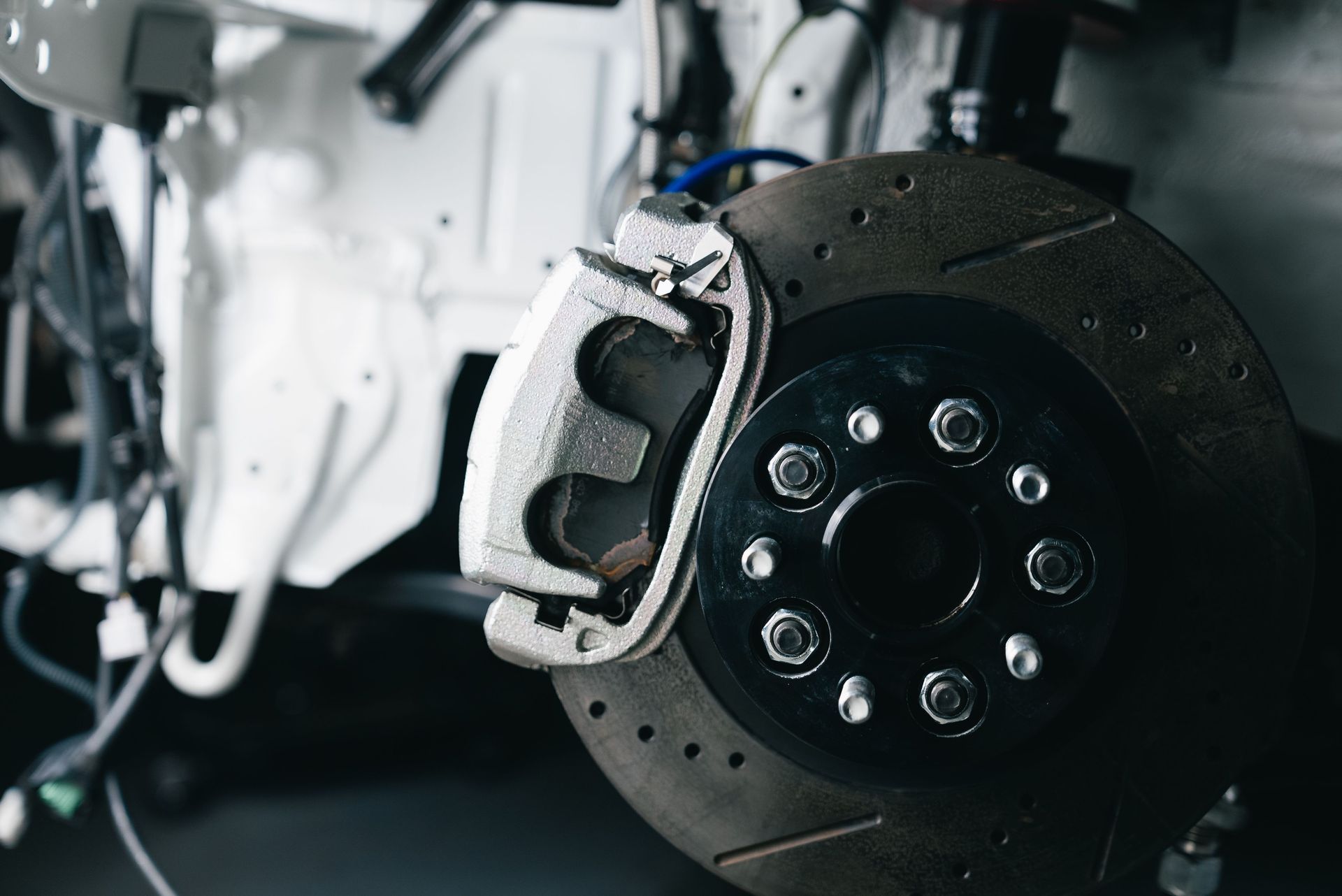
What Reliable Braking Looks Like After Service
Brake systems convert hydraulic pressure into friction that slows your vehicle, and that process requires intact friction surfaces, sealed hydraulic lines, and calipers or wheel cylinders that apply even pressure across the pad or shoe. When pads wear thin, rotors develop grooves, or fluid absorbs moisture and loses effectiveness, stopping distance increases and pedal feel changes.
After brake service, you'll notice firm pedal response, smooth stops without pulsation or noise, and the confidence that your vehicle will slow predictably when needed. The grinding, squealing, or vibration that brought you in is gone, and braking feels controlled rather than uncertain.
Brake service can include replacing pads or shoes, resurfacing or replacing rotors and drums, rebuilding or replacing calipers, flushing old fluid, or repairing leaking lines depending on what the inspection reveals. Regular evaluation identifies wear before it reaches the point where metal-to-metal contact damages rotors or drums, which keeps repair costs lower and maintains safe stopping performance.
What Customers Ask About Brake Service
Brake concerns raise immediate questions about safety, timing, and what the service process involves, and these answers clarify what you can expect.
What causes brake squealing?
Squealing often results from a wear indicator tab contacting the rotor to signal that pad thickness has reached the replacement point, though it can also be caused by glazed pads, contaminated friction surfaces, or vibration between the pad and caliper.
How does grinding noise differ from squealing?
Grinding indicates that the friction material has worn completely away and the metal backing plate is contacting the rotor or drum, which damages both surfaces and requires more extensive repair than a simple pad or shoe replacement.
Why does the brake pedal feel soft or spongy?
A soft pedal typically indicates air in the hydraulic lines, low fluid level due to a leak, or worn brake components that no longer build adequate pressure, and each of these conditions requires different corrective action.
When should brake service be scheduled in Oakland?
Any change in braking performance—noise, vibration, longer stopping distance, or altered pedal feel—should prompt immediate inspection, because brake effectiveness declines rapidly once wear reaches a critical point.
What's included in a brake inspection?
The process includes measuring friction material thickness, checking rotor and drum surface condition, testing caliper and wheel cylinder operation, inspecting hoses and lines for leaks or damage, and evaluating brake fluid color and moisture content.
Regular brake evaluation identifies wear before it becomes a larger concern, and Divine Automotive Services inspects the components involved in safe, consistent braking. Schedule your brake service when stopping performance changes so the system can be restored to reliable operation.